
The Roman Assemblies as a Political Case
The Social ContractThis flow follows Rousseau’s account of Roman institutions as a practical demonstration of popular sovereignty, and of how their design and corruption shaped participation.
increasing Bearing strength in each event
 decreasing
Bearing strength in each eventdecreasingRomulus Divides the People

Romulus Divides the People
Early Political Structure
Rousseau describes the people as divided into tribes, curiae, and military centuries. These arrangements gave the early community organized forms of assembly.
Balancing Social Forces
The institutions distributed influence among people, patricians, and senate. Rousseau reads their design as an attempt to prevent any single element from ruling unchecked.
Servius Reorganizes Rome
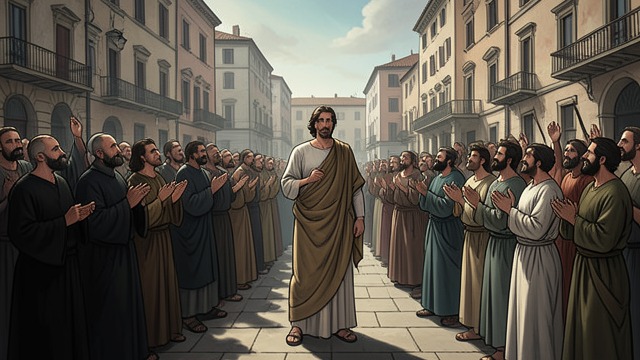
Servius Reorganizes Rome
New Divisions
Servius replaces the original tribal basis with local tribes and adds a wealth-based division into classes and centuries. The structure changes how citizens meet and vote.
Unequal Influence
The first class receives a majority of centuries despite having fewer people. Rousseau uses this arrangement to show how voting procedures can privilege wealth.
Three Assemblies Compete
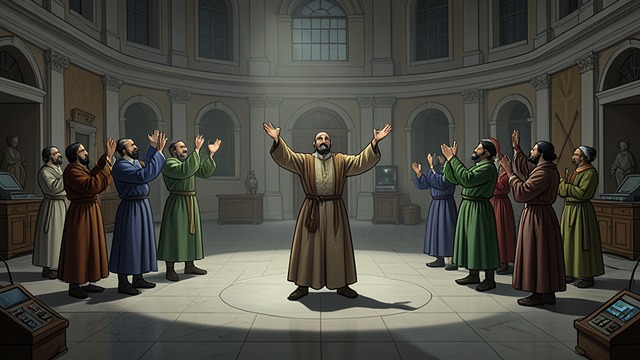
Three Assemblies Compete
Distinct Political Functions
The curiate, centuriate, and tribal assemblies serve different constituencies and purposes. No single voting arrangement is neutral in its effects.
Sovereignty in Practice
Rousseau argues that citizens retained real voting rights through the comitia. Their institutions made popular authority visible, though unevenly distributed.
Voting Safeguards Erode

Voting Safeguards Erode
Public Votes and Corruption
Open voting once relied on civic honesty, but purchased votes made secrecy necessary. Rousseau argues institutions must adapt when public morals decline.
Imperfect Remedies
Ballots and anti-corruption measures could not fully prevent manipulation. Procedure alone could not restore the virtue on which popular government depended.
Assemblies Outlast Abuse
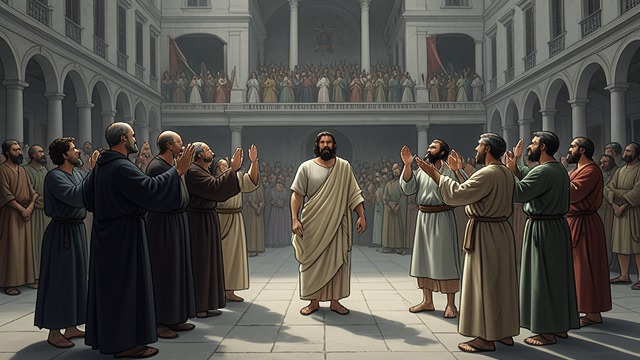
Assemblies Outlast Abuse
Persistent Public Capacity
Even amid intrigue, Romans continued to elect magistrates, pass laws, and judge cases through popular assemblies. Rousseau emphasizes how much their institutional practice could accomplish.
A Warning in the Example
The case does not prove that every assembly is just. It shows that political participation can be organized at scale, while remaining vulnerable to corruption.
At the legendary foundation of Rome
During the reign of Servius Tullius
During the Roman Republic, after the three comitial forms develop
During the later Republic, as voting customs change
Toward the closing years of the Roman Republic
